
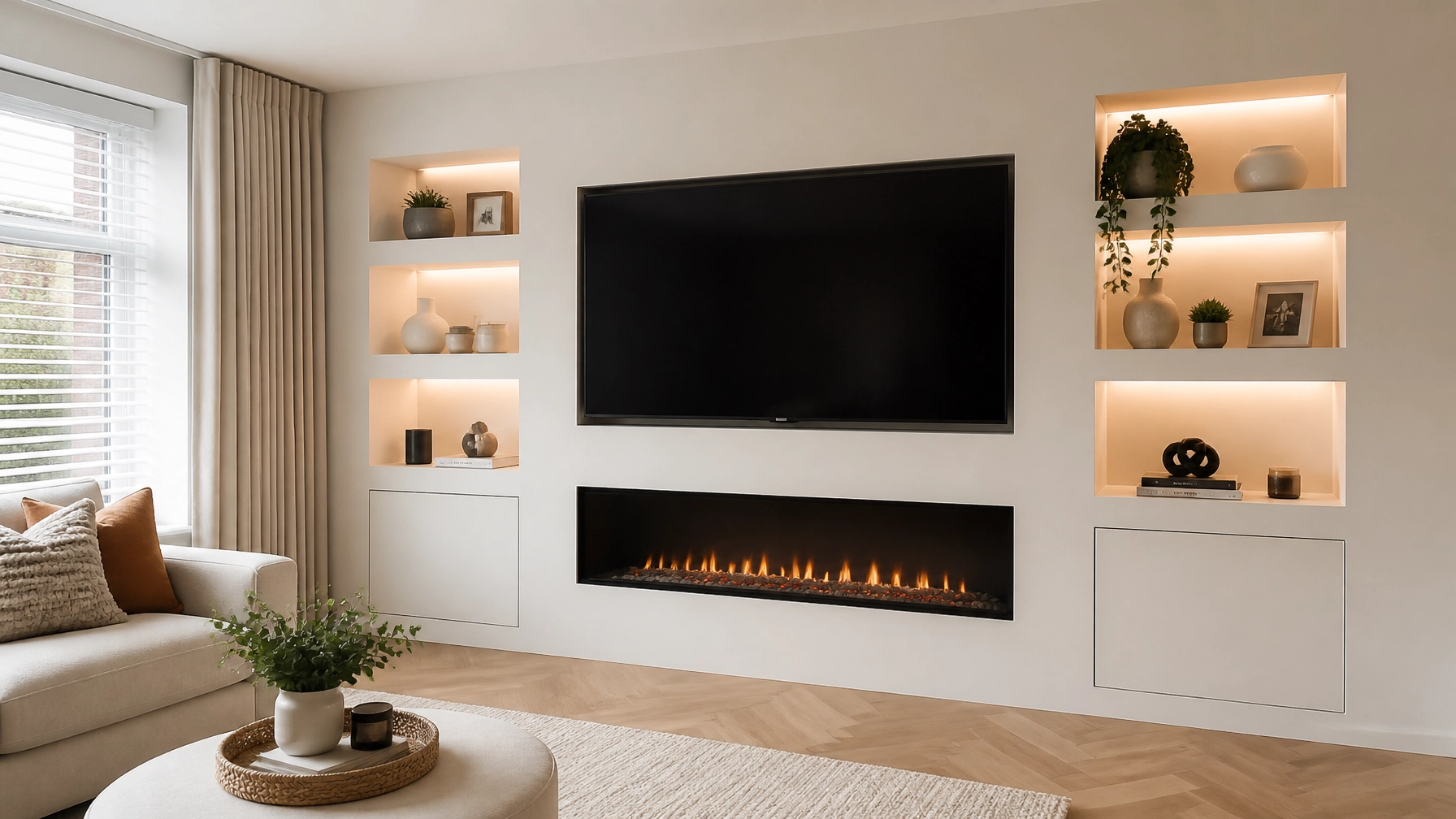
At MSP Plastering Solutions, we’ve seen a massive surge in homeowners across Newcastle, Jesmond, and Gosforth looking to transform their living spaces with a bespoke media wall. It’s easy to see why: they offer a sleek, modern aesthetic that hides messy cables and provides a stunning focal point for any room.
However, a truly flawless media wall isn’t just about the skimming and finish; it’s about what’s happening behind the scenes. Without a solid plan for your electrical sockets, lighting zones, and cable management, your dream installation could quickly become a maintenance headache.
Whether you're in Ponteland planning a full renovation or in Whitley Bay upgrading your lounge, here are 10 technical essentials you need to know before the plastering begins.
1. Never Rely on Extension Leads
The biggest mistake we see in Kingston Park and Great Park is homeowners trying to "tuck" a multi-way extension lead inside the stud wall. Don’t do it.
Extension leads are not designed to be permanently enclosed within a wall. Over time, they can overheat, and if a fuse blows, you’ll have to rip out your beautiful plasterwork to fix it. Instead, we always recommend installing a bank of fixed, hard-wired double sockets.
2. Plan for More Sockets Than You Think
Think about everything that needs power. It’s rarely just a TV. You need to account for:
- The TV itself
- Soundbar or Surround Sound system
- Games consoles (PS5, Xbox, etc.)
- Set-top boxes (Sky, Virgin, BT)
- The electric fire (which often requires its own dedicated supply)
- LED lighting drivers
For a standard media wall installation in Newcastle, we usually advise at least 4 to 6 double sockets strategically placed behind the main components.
3. Segregate Power and Data Cables
To keep your 4K picture seamless and your internet speeds high, you must keep your power cables separate from your data cables (HDMI, Ethernet, and Optical).
Running high-voltage power lines directly alongside HDMI cables can cause electromagnetic interference, leading to flickering screens or dropped signals. When we handle the plasterboarding and framing, we ensure there is adequate spacing or separate conduits to keep your signals clean.

4. Master the "Lighting Zones"
Lighting is what takes a media wall from "nice" to "stunning." Most homeowners in Tynemouth and Darras Hall opt for a three-zone approach:
- Backlighting: LED strips behind the TV to reduce eye strain.
- Niche Lighting: Spotlights or strips inside recessed shelving to highlight ornaments.
- Floor Wash: Subtle lighting at the base of the wall for a floating effect.
Ensure these zones are switched independently so you can set the mood for a movie night without having the whole wall brightly lit.
5. Keep Your LED Drivers Accessible
Every LED strip requires a driver (transformer). A common error is plastering these into the wall void. If that driver fails: and they eventually do: you'll be left with a dark wall and no way to fix it without damaging the professional finish.
We recommend placing drivers in an accessible location, such as:
- Behind a removable "secret" panel.
- Inside a nearby cupboard or integrated storage unit.
- Behind the TV itself (if using a pull-out bracket).
6. Fire Safety and Clearances
If your media wall includes an integrated electric fire, safety is paramount. Most modern electric fires are "front-venting," meaning they blow heat into the room rather than up into the wall. However, they still generate significant internal heat.
You must follow the manufacturer’s guidelines for clearances. Typically, a TV should be mounted at least 200mm to 300mm above the fire to prevent the screen from overheating. Using fire-rated plasterboard within the internal structure is another smart move for added peace of mind.
7. Use Conduits for Future-Proofing
Technology changes fast. The HDMI cable you use today might be obsolete in five years. We always suggest installing wide-diameter plastic conduits (essentially "tunnels" inside the wall) with a pull-cord inside.
This allows you to easily fish new cables from the TV down to your media devices without ever having to touch the plaster. It’s a small detail that saves huge amounts of stress during a full house renovation.

8. Consider the Wall Depth
A media wall isn't just a flat surface; it’s a 3D structure. To house a modern 3-sided electric fire and a recessed TV, you generally need a depth of 20 to 24 inches (500mm – 600mm).
In smaller homes in Heaton or Whitley Bay, we often design "slimline" walls that use clever framing techniques to minimize the footprint while still providing that high-end look.
9. Accessibility for Maintenance
Your media wall should never be a "sealed box." Whether it's to reset a router, change a faulty HDMI lead, or access a socket, you need entry points.
We often integrate removable panels or use "push-to-open" doors that blend perfectly with the skimmed surface. When finished with our expert skimming, these panels are virtually invisible but remain fully functional.
10. Compliance with Part P Building Regulations
In the UK, electrical work in dwellings must comply with Part P of the Building Regulations. This ensures the installation is safe from fire and electric shock.
While we handle the bespoke media wall design and the flawless plastering, we always work alongside qualified electricians to ensure all wiring is certified and safe. Never settle for an "all-in-one" handyman who isn't prepared to provide the necessary electrical certificates.
Why Choose MSP Plastering Solutions?
We’re trusted for the quality of our work, our attention to detail, and our consistently flawless finishes on every bespoke media wall project. From the initial plasterboarding to the final smooth finish, our team ensures every detail is handled with precision. We also back that up with 300+ positive reviews, including over 220 on Checkatrade, 45 on Trustpilot, and 62 on Google. We take pride in being exceptionally clean and tidy, ensuring your home in Newcastle remains liveable during the process.
Frequently Asked Questions
Can I put a TV above any electric fire?
Most modern electric fires are designed for this, but you must ensure the fire is "front-venting" and that you maintain the manufacturer's recommended distance (usually 200mm+) to avoid heat damage to the TV.
How long does a media wall installation take?
A standard installation, including framing, electrical work, plastering, and skimming, usually takes between 3 to 5 days depending on the complexity and drying times.
Do you handle the electrical work?
We manage the full project and work with trusted, fully qualified electricians who provide all necessary certifications, ensuring your home stays compliant with UK safety standards.
Is it messy?
Plastering can be messy, but at MSP, we are known for our cleanliness. We use high-quality floor protection and always clean the workspace thoroughly after every shift.
Ready to Start Your Project?
If you're looking for a bespoke media wall in Newcastle, Gosforth, Jesmond, or the surrounding areas, we are here to help.
Get in touch today for a free, no-obligation quote and let's build something stunning together! 🏠✨
More From MSP
More from our blog
Related Posts

When you are planning a renovation in Newcastle upon Tyne [...]

Gosforth is home to some of the most stunning properties [...]

Renovating a property in Tynemouth is a unique experience. Whether [...]
